Pomme d'Happy

At Pomme d’Happy, we support children’s development through play, connection, movement, and activities suited to their age and individual readiness. We don’t expect every child to take part in the same way or achieve the same result. The same theme can be explored in different ways. Younger children may take part through movement, sensory experiences, songs, and short activities, while older children can engage for longer and explore the subject in greater depth.

French and English

French and English are an important part of everyday life at Pomme d’Happy.

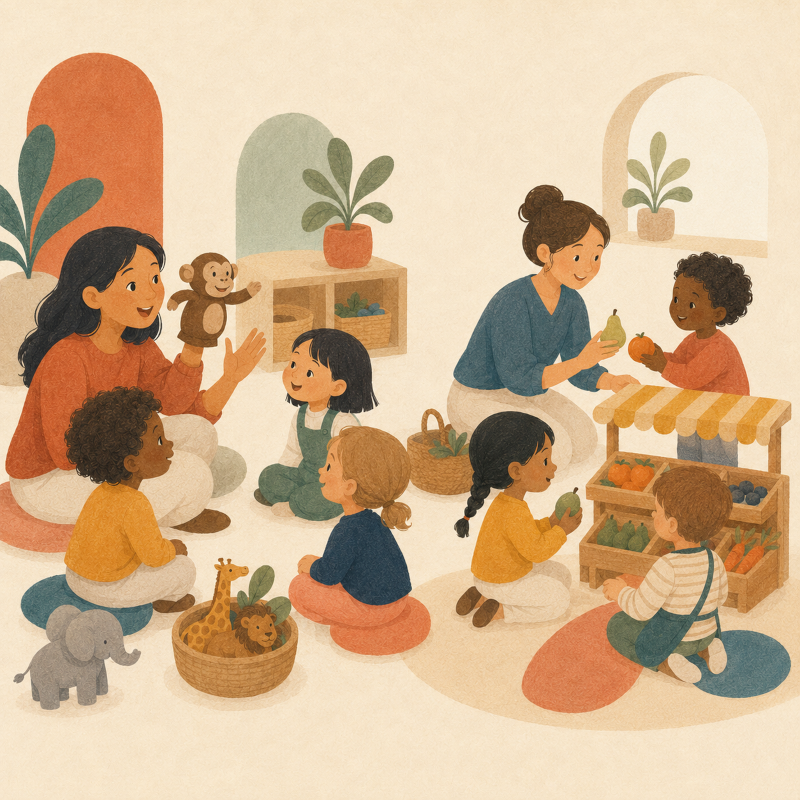
Children experience both languages through songs, books, games, conversations, and everyday routines. We support understanding through gestures, images, repetition, and context, without testing or putting pressure on a child to speak before they are ready.

Our aim is to gradually nurture an interest in languages, build understanding of familiar words and phrases, and help children feel confident communicating.
Language, books and early literacy

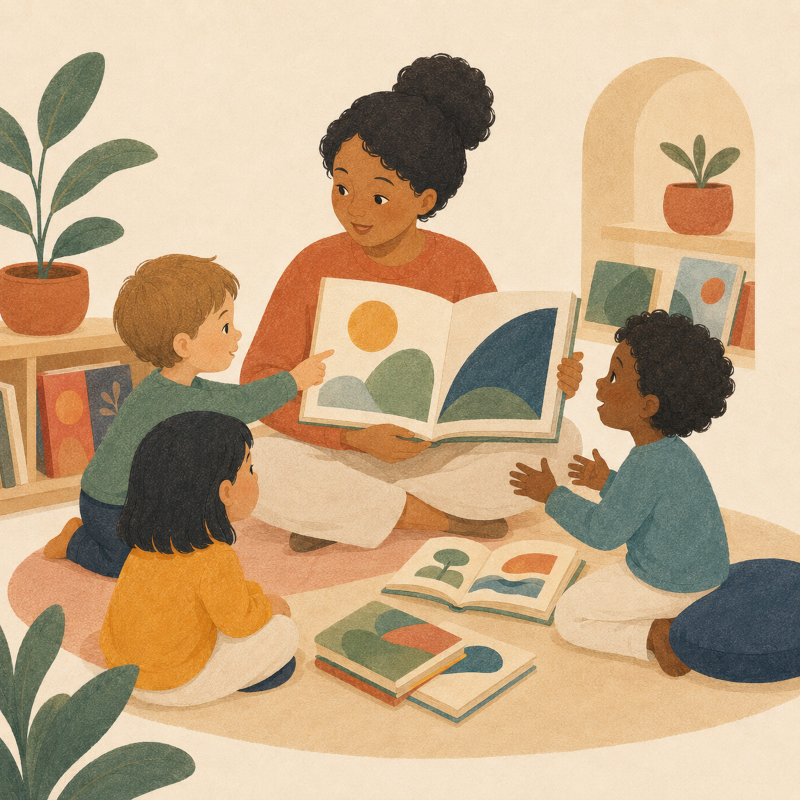
Conversations, stories, and books help children expand their vocabulary, ask questions, and talk about their own experiences.

Step by step, we introduce them to sounds, rhymes, words, their own name, and individual letters. Through drawing, modelling, and fine-motor activities, we also help build the foundations for the skills they will later need for writing.

Numbers, logic and discovering the world

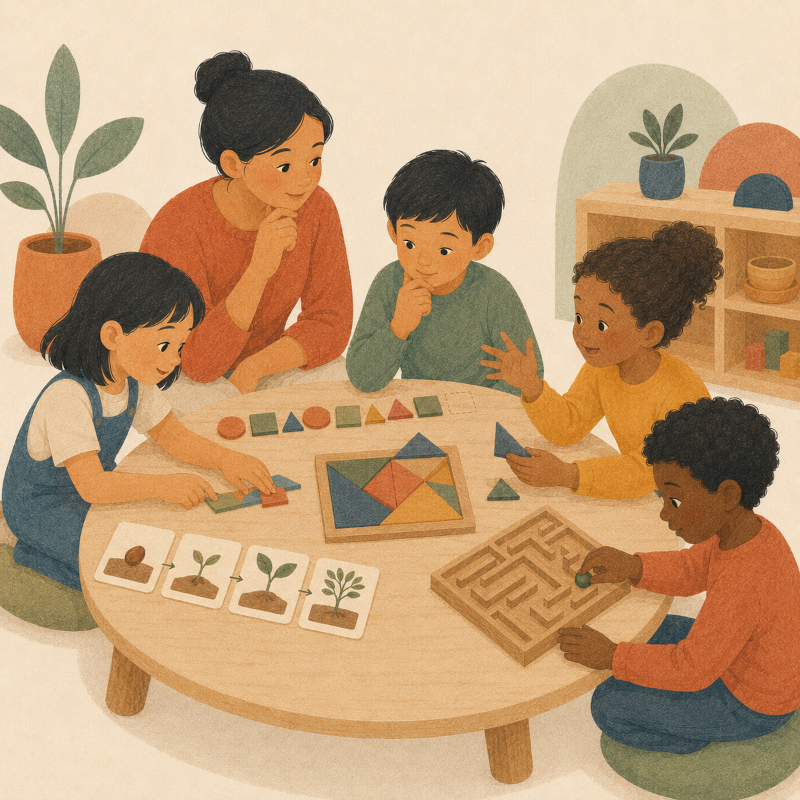
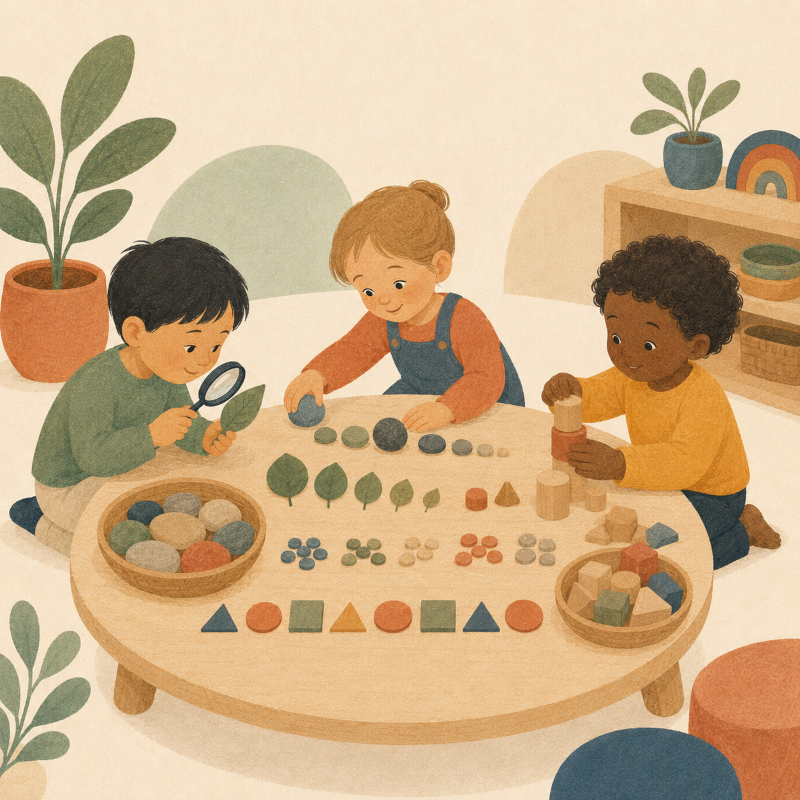
We count, compare, sort, and explore quantities, shapes, colours, and sequences. We also include short logic-based activities that encourage observation, curiosity, and thinking.

Our themes give children opportunities to learn more about nature, the seasons, animals, plants, families, different occupations, and the world around them. Sometimes this happens through simple experiments, observation, or shared projects.

Creativity and movement

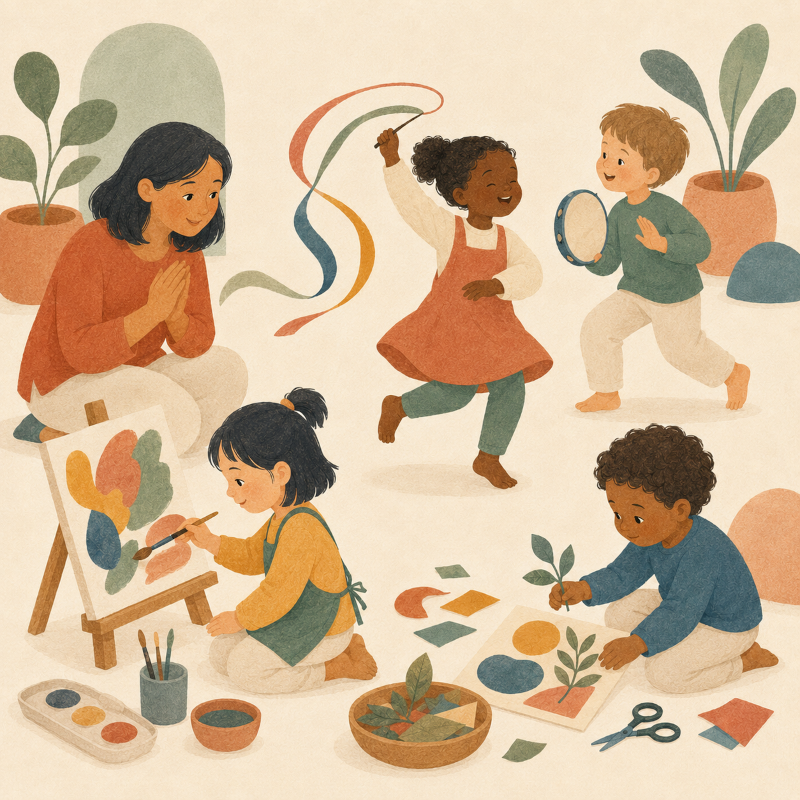
We draw, model, explore different materials, listen to music, and move to rhythm.

What matters to us is the process, rather than having every child produce the same result. We leave room for choice, imagination, and each child’s individual way of expressing themselves.

Daily movement supports coordination, balance, gross and fine motor skills, and helps children develop confidence in their own bodies.

Independence and getting along with others

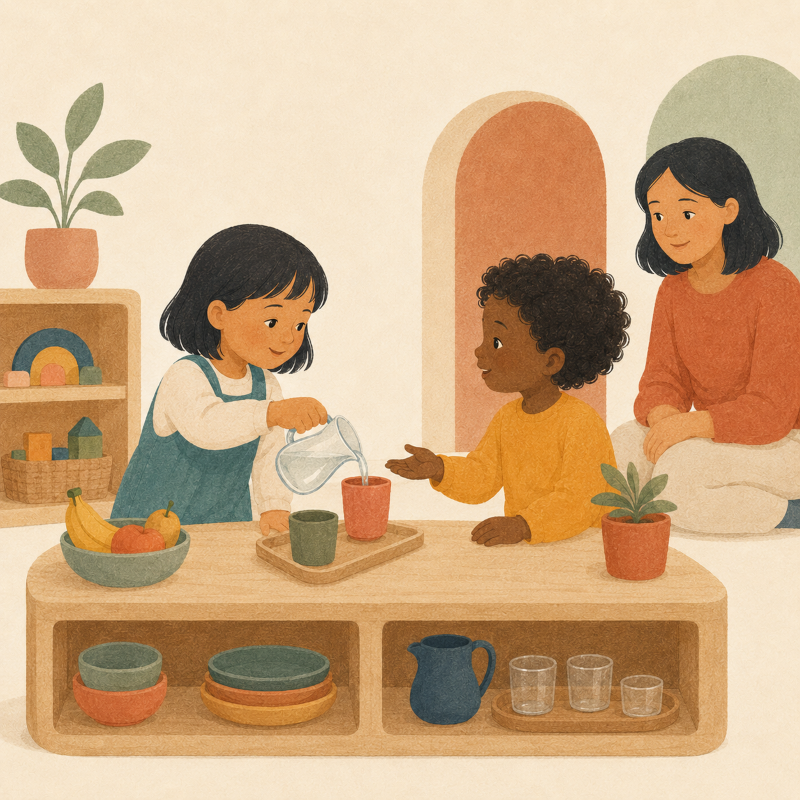
We support children as they gradually learn to eat independently, dress themselves, tidy up, and make age-appropriate choices.

In their interactions with others, they learn to wait, take turns, share, and ask for help when conflicts arise. We help them recognise and name their emotions and, little by little, find more appropriate ways to express them.

More challenges for older children

For older children, we also include more structured activities involving letters, numbers, logic, and small projects.

We encourage them to follow short instructions, complete tasks they have started, and develop skills that will support them as they move on to the next stage of their education.